Villa Borghese Gardens

Villa Borghese's historical context

The famous Villa Borghese stands as a testament to the lavish lifestyle of the Borghese family and their enduring impact on the arts. This historical landmark illustrates the transformation from private estate to public park, showcasing architectural brilliance and cultural heritage.

Borghese Patronage of the arts
The beginning of the collection

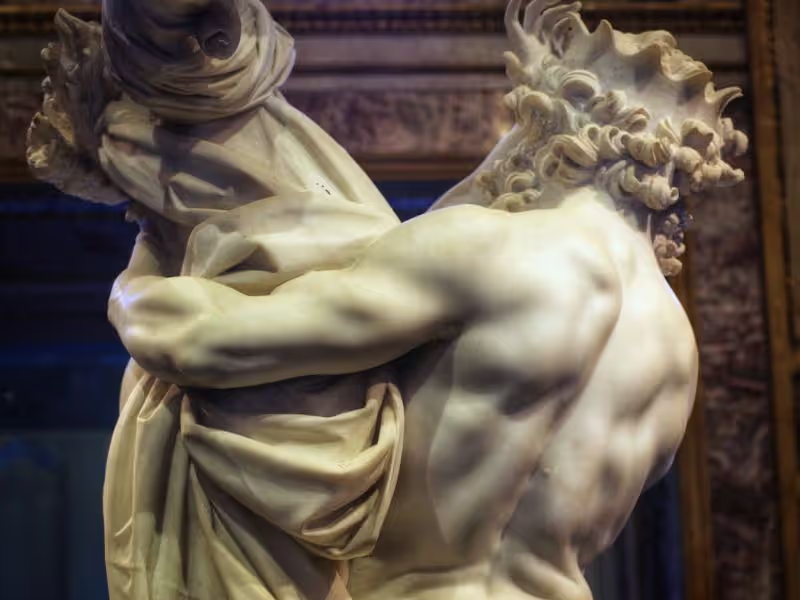
Cardinal Scipione Borghese's patronage significantly fostered the rise of artists like Gian Lorenzo Bernini. The cardinal amassed an art collection that would become the foundation of the Borghese Gallery, distinguishing the family as critical benefactors of the arts. Prince Marcantonio IV Borghese later carried on the tradition, further enriching the villa and its offerings.

The embodiment of culture

The Villa Borghese estates hold a deep cultural significance, encompassing a rich tapestry of art, literature, performances, and historical collections. The cultural influence radiates from its art galleries hosting works by masters like Bernini and Caravaggio, to the tradition of literature and modern-day events.

Artistic influence and legacy

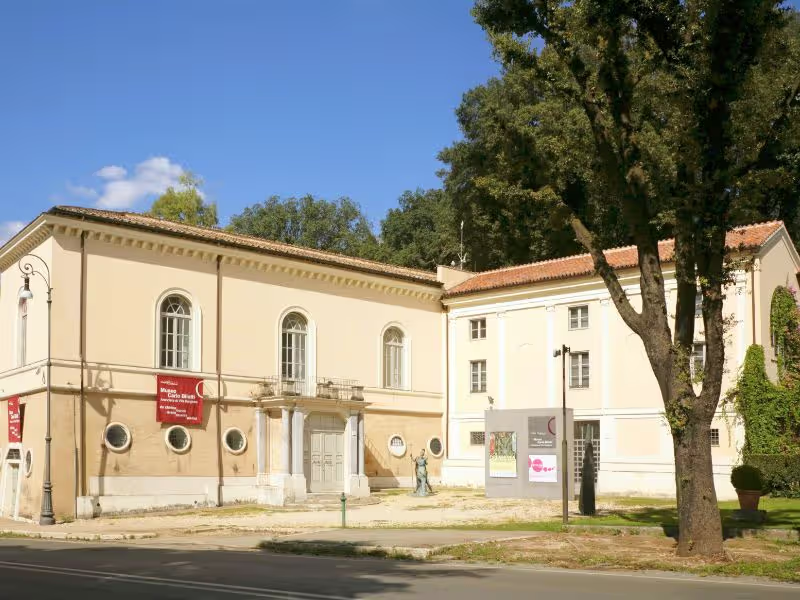
The masterpieces by Bernini, such as his dynamic sculptures, and Caravaggio, with his evocative paintings, are the proof of the Borghese family's historical patronage – that has left an indelible mark on the world of art. The villa's distinct Art Gallery and Museum Carlo Bilotti are testament to this lasting artistic legacy.

Literary connection and inspiration

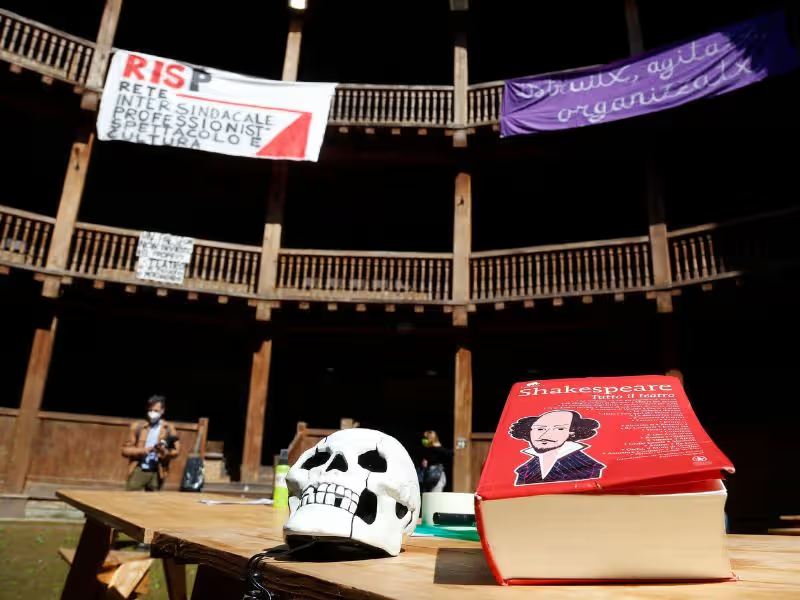
Villa Borghese's culture extends to illustrious writers like Victor Hugo and Goethe, who found inspiration within its gardens. The villa's connection to literature is also embodied in Shakespeare, with the Silvano Toti Globe Theatre, modeled after the iconic Shakespeare's Globe Theatre. Casina di Raffaello offers literary and educational events for children, promoting the joy of reading and storytelling.

The several museums within

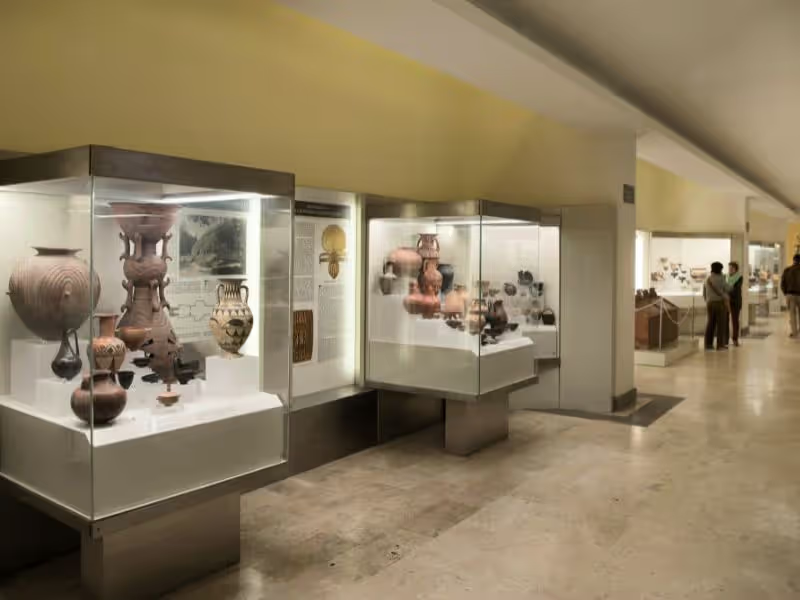
Numerous museums reside within the Villa Borghese's wide area:‍• Museo Nazionale Etrusco di Villa Giulia• Galleria Nazionale d'Arte Moderna e Contemporanea• Museo Carlo Bilotti• Museo Pietro Canonica• Bioparco di Roma (Zoo)

Year-round entertainment

Events and performances at venues like Casa del Cinema and Piazza di Siena enliven the estate year-round. The annual Concours d'Elegance held in Piazza di Siena showcases a tradition of excellence and elegance. The Silvano Toti Globe Theatre offers a dynamic program, highlighting works by Shakespeare and contributing to the estate's vibrant cultural scene.

What activities are there to do at the Villa Borghese?

Enjoy panoramic views of Rome

Rooted atop the Pincian Hill, the Borghese Gardens offer stunning panoramic views of Rome, especially enchanting at dawn and dusk. Meandering walkways lead to the picturesque Water Clock and the serene Temple of Aesculapius, set by the tranquil waters where ducks and turtles thrive.

Check out monuments and sculptures

Gracing the gardens are heritage-rich marvels like the neoclassical Temple of Aesculapius, the intricate fountains, and a diverse collection of statues. The Globe Theatre, inspired by Shakespeare's own, holds performances that bring Elizabethan drama to life amid the natural backdrop.

Engage in fun activities for families

With winding paths perfect for bikes and shaded areas to enjoy a break at a charming cafe, the park caters to both the active and leisure-seeking individuals. The Casina di Raffaello offers a creative escape for children while adults can enjoy a peaceful rowboat ride on the lake.

Inspect the local flora and fauna

The Borghese Gardens are a living tapestry of Roman flora and fauna, showcasing an array of plant species and animals within the confines of the Bioparco (zoo). This well-maintained habitat is a testament to Rome's dedication to nurturing and displaying nature's bounty.

Galleria Borghese

The Galleria Borghese, housed within the resplendent Villa Borghese, stands as a testament to the grandeur of art with its remarkable assemblage of sculptures and paintings by masters like Bernini, Caravaggio, Titian, and Raphael.

The Galleria Borghese was constructed to be more than just an art gallery; it was envisioned as a magnificent showcase for Cardinal Scipione Borghese's collection. The building's design was realized by the architect Flaminio Ponzio, who is credited with the creation of the Casino Nobile, the core of the gallery. Ponzio's work is distinguished by its careful use of marble, which adds to the splendid interior that complements the masterpieces within.

Constructed at the beginning of the 17th century, the gallery reflects the Cardinal's keen interest in art and culture, represented in the gallery's iconic art collection. Bernini’s sculptures and Caravaggio’s paintings are highlights of the collection, reflecting the cardinal's passion for both the Baroque flair and the dramatic realism of the period.

Visitors to the gallery can appreciate the intricate relation between the artworks and the architectural features, transporting them back to the era of its construction. For a more in-depth understanding of the Galleria Borghese and its art, a guided tour is highly recommended. Tickets to the gallery are a prized commodity due to the strict reservation system, which helps preserve the tranquil ambience of this historic site.

FAQs and tips

What are the opening hours for Villa Borghese?

The Villa Borghese public gardens are open daily from dawn to dusk. For information on the Borghese Gallery opening hours, click here.

Can visitors access Villa Borghese Gardens for free?

Yes, entry to the Villa Borghese Gardens is free of charge, offering an array of landscapes, fountains, and sculptures to appreciate without any cost.

What is the best time of day to visit the Villa Borghese Gardens?

The best time of day to visit the Villa Borghese Gardens is early morning for cooler weather, fewer crowds, and soft light for photos.

Are the Borghese gardens worth visiting?

Yes, the Villa Borghese Gardens are worth visiting for their beautiful landscapes, art museums, sculptures, and peaceful escape from city life.

How much time do I need at Borghese Gardens?

You'll need at least 2 to 3 hours to explore the Villa Borghese Gardens' main attractions, or longer if you are considering going inside some of its museums.

How long does it take to walk around Villa Borghese?

Walking around the Villa Borghese Gardens can take 1-2 hours, depending on pace and stops for sightseeing.