
The Borghese Gallery
About the Borghese Gallery
The Borghese Gallery is a prestigious art gallery in central Rome, established in the 17th century to exhibit Cardinal Scipione Borghese's remarkable collection of paintings, sculptures, and antiquities. A testament to the artistic legacy of a passionate patron of the arts.
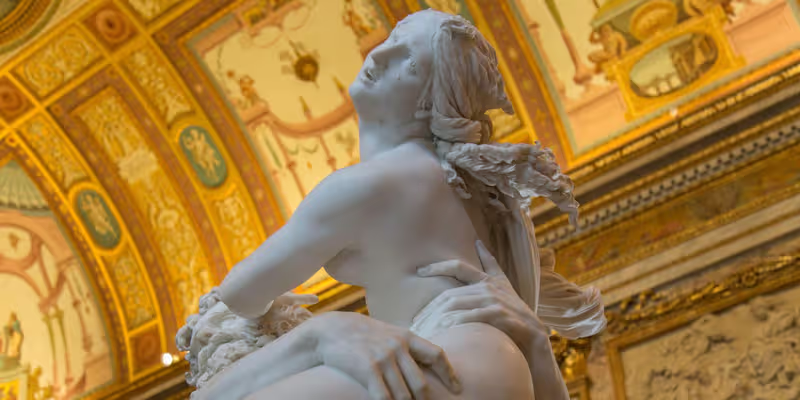
Housing an exceptional collection of sculptures, the gallery showcases the works of prominent artists such as Gian Lorenzo Bernini and Antonio Canova. The former, a master of Baroque art, is renowned for his expressive and dynamic figures, while the later was a leading figure in Neoclassical sculpture.
Visitors can also get an intimate look at pioneering painters, including Caravaggio, known for his dramatic use of light and shadow, and Raphael, a master of the High Renaissance. The diversity of styles and artists within the gallery allows visitors to appreciate the evolution and intricacies of arts throughout different historical periods.
Borghese Gallery Highlights
Interesting facts about the Borghese Gallery


Must see inside the Borghese Gallery
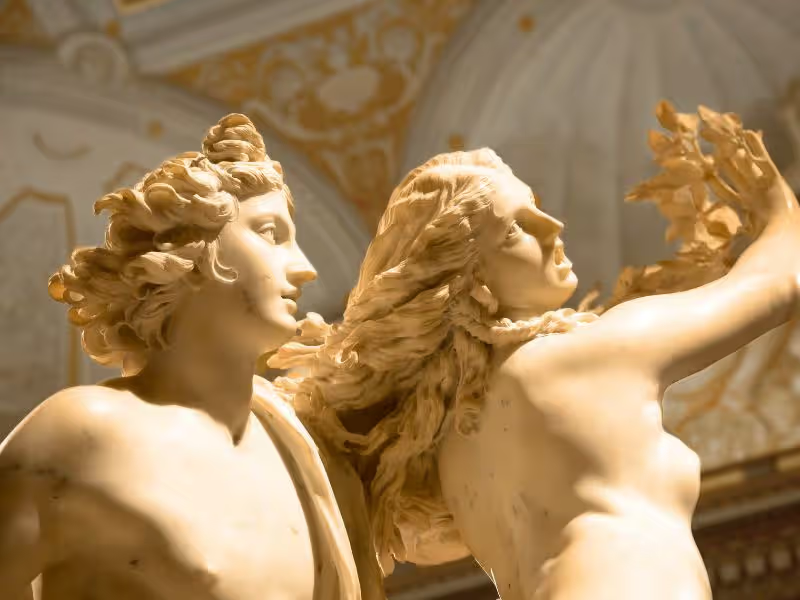
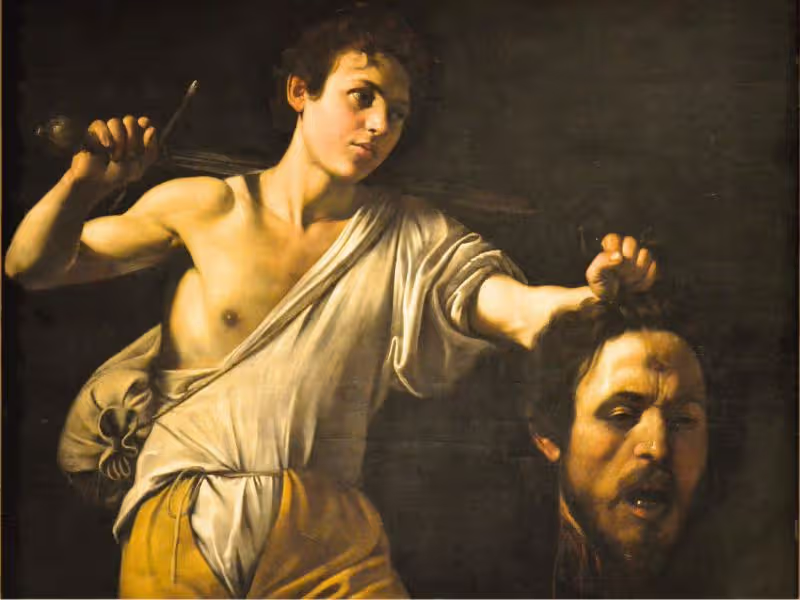
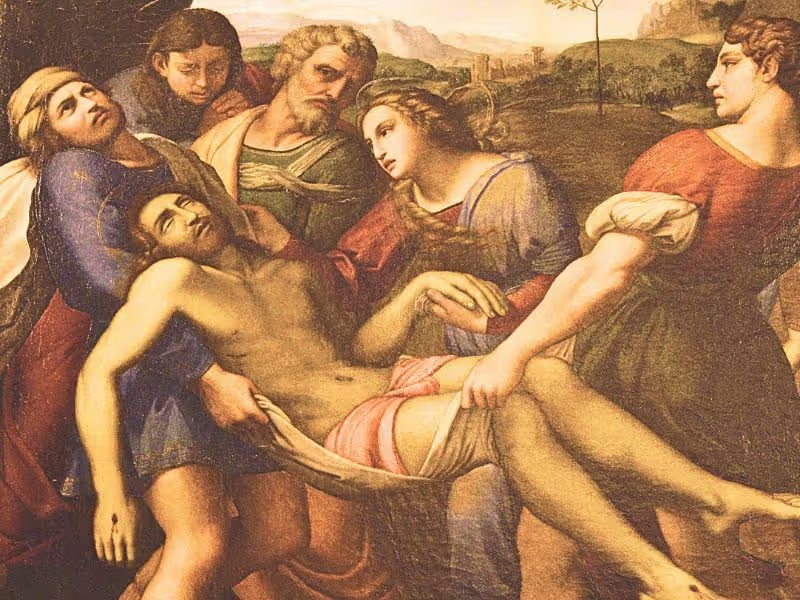
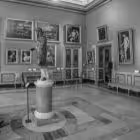
The Borghese Gallery and Museum displays its vast collection of sculptures, paintings and mosaics in its 20 frescoed rooms and storerooms. On the ground floor you will find the Mariano Rossi entrance hall, the Paolina room, the David room, the Apollo and Daphne room, the Room of Emperors, the Hermaphrodite room, the Aeneas and Anchises room, the Egyptian room, the Silenus room, the Chapel and Porch.
On the second floor you can visit the Dido room, the Hercules room, the room of Ferrarese Painting, the room of the Bacchantes, the Fame room, the Lanfranco Loggia, the Aurora room, the Flora room, the Court of Angers room, the Jupiter and Antiope room, the Helen and Paris room, the Psyche room, the Vestibule and Passageway.
The Storerooms are located on the third floor and feature three main rooms to display over 260 works, organized according to school of painting and subject matter. Visits to the Storerooms is limited to small number of people and only during set days. In the basement area of the Borghese Gallery you will also find an information, a café, restrooms, a bookshop and cloakroom.
For more information check our complete Visitor's Guide.
FAQs and tips
Is the Borghese Gallery open to the public now?
Yes, the Borghese Gallery is now open to the public. For further details, check the opening hours.
Are tickets needed to visit the Borghese Gallery?
Yes, tickets are required to visit the Borghese Gallery in Rome. Due to the gallery's popularity and to protect the artwork, the number of visitors allowed inside is limited to 180. As such, it is highly recommended to reserve your tickets in advance, especially during peak tourist seasons.
Where can tickets for the Borghese Gallery be purchased?
You can purchase tickets by phone (from 9:30 AM to 6 PM on week days), through the gallery's official website or via authorized ticket sellers. Tickets are available in 2-hour time slots, so you need to choose a specific date and time for your visit when booking. Keep in mind that tickets are non-refundable and no cancellations or alterations can be made after they have been issued.
How much does it cost to visit the Borghese Gallery?
Normal Two-hour tickets cost €15, while the tickets for the final slot, at 5:45 PM, are priced at €10. The reduced rate for EU citizens aged 18 to 25 is €4. These prices include a mandatory €2 booking fee.
Visitors under the age of 18, students and teachers can visit for free, paying only the booking fee. People with disabilities and their carers can also visit for free and are exempt from the booking fee.
Roma Pass card-holders can visit the Borghese Gallery for free, but must book a ticket. To avoid paying the €2 service fee, you can make your reservation via email on romapass@tosc.it.
Why visit the Borghese Gallery?
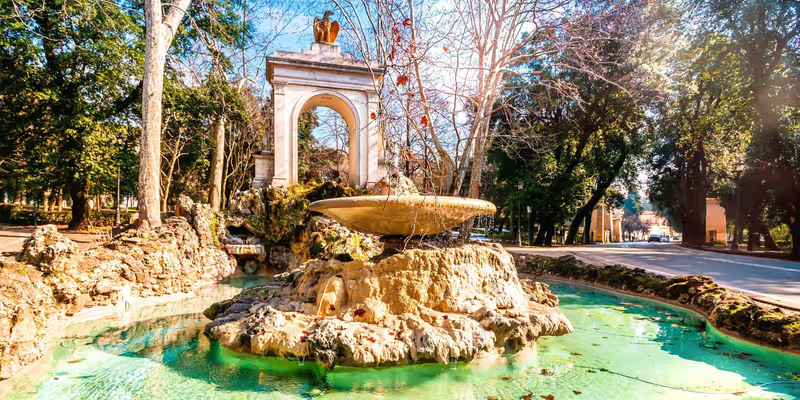
Set inside the serene gardens on Pincian Hill, in the outskirts of the ancient city of Rome, the Borghese Gallery is one of the most popular and fascinating art galleries worldwide. Featuring an unrivaled collection of sculptures by Bernini and important works by Caravaggio, Raphael and Titian, visitors are immersed in a grand narrative of art and history. To delve deeper into the stories behind these masterpieces and discover the hidden gems of the Borghese Gallery, browse through our blog posts.
Where is the Borghese Gallery located?
The Borghese Gallery is housed inside the Villa Borghese Pinciana, which is located at Piazzale Scipione Borghese, in central Rome. It can easily be accessed by public transportation, with the Flaminio, Spagna and Barberini metro stations being a short walk away.
If traveling by bus, the closest stops are Galleria Borghese and Pinciana/Museo Borghese, which are close to the gallery entrance.
What can I see inside the Borghese Gallery?
The Borghese Gallery is known for its impressive collection of sculptures, frescoes, mosaics and paintings from the 15th to 18th centuries, including masterpieces by Gian Lorenzo Bernini, Caravaggio and Raphael. Visitors can also find important works by Antonello da Messina, Giovanni Bellini, Titian, Correggio and Canova. The gallery also houses an extensive collection of ancient Roman artwork, statues and busts. You can learn more in our blog about the artists represented in the Borghese Gallery.
Are guided tours available for the Borghese Gallery?
Yes, there are many options for guided tours at the Borghese Gallery. You can book a guided tour in English or Italian via the official website for an additional €8 per person, however these are only available for specific slots each day. Tour operators typically offer guided visits to the Borghese Gallery in more languages and time slots, for greater convenience.
How do I skip the lines at the Borghese Gallery?
There are no lines to skip at the Borghese Gallery, since you must buy tickets in advance – either online, by telephone or from a tour operator. Due to immense popularity, visits to the galleries are strictly carried out in two-hour slots at set times. It is important to arrive on time for the slot you have booked, as latecomers may not be allowed entry.
When is the Borghese Gallery open for visits?
The Borghese Gallery is open for visits from Tuesday to Sunday, between 9 AM and 7 PM. For further information and details on when it is closed, check the opening hours.
How much time do I need at the Borghese Gallery?
Due to the immense popularity of the Borghese Gallery, tickets are issued in two-hour slots (except for the final slot at 5:45 PM, which lasts 1 hour and 15 minutes) and up to 180 visitors are allowed in at each slot. In most cases, this is ample time to explore the gallery and its works of art.
Is photography allowed inside the Borghese Gallery?
Visitors can take photos inside the Borghese Gallery, however the use of flash, tripods, selfie sticks and other professional equipment is not allowed. Check all Borghese Gallery rules here.
Is there a dress code at the Borghese Gallery?
There is no strict dress code at the Borghese Gallery, however, visitors are generally expected that dress in a manner that is respectful and appropriate for a cultural institution. This typically means avoiding overly revealing clothing and attire with offensive slogans or imagery that may cause discomfort to other visitors.
What am I allowed to take with me inside the Borghese Gallery?
Visitors are only allowed to take with them inside small bags and purses, no larger than 21 x 15 cm, as well as strollers for children up to the age of 2. Any larger bags, backpacks, umbrellas, self-sticks, etc must be checked in at the wardrobe.
Food and drink (including water) are also not allowed inside the gallery.
No animals are allowed inside the Borghese Gallery, with the exception of guide dogs.
Click here for more information.
Is the Borghese Gallery wheelchair-accessible?
Yes, there is a stair lift to the left of the external staircase, by the main entrance of the Borghese Gallery. There is a small elevator inside that allows access to the second floor of the gallery, however it does not accommodate large wheelchairs. The Borghese Gallery can provide visitors with a suitable-sized wheelchair to use the elevator and explore the second floor.
To ensure availability, visitors with disabilities or reduced mobility are advised to contact the Borghese Gallery in advance, by calling +390667233753 or sending an email at ga-bor.accessibilita@cultura.gov.it.
Here's everything you need to know about the Borghese Gallery's accessibility.